

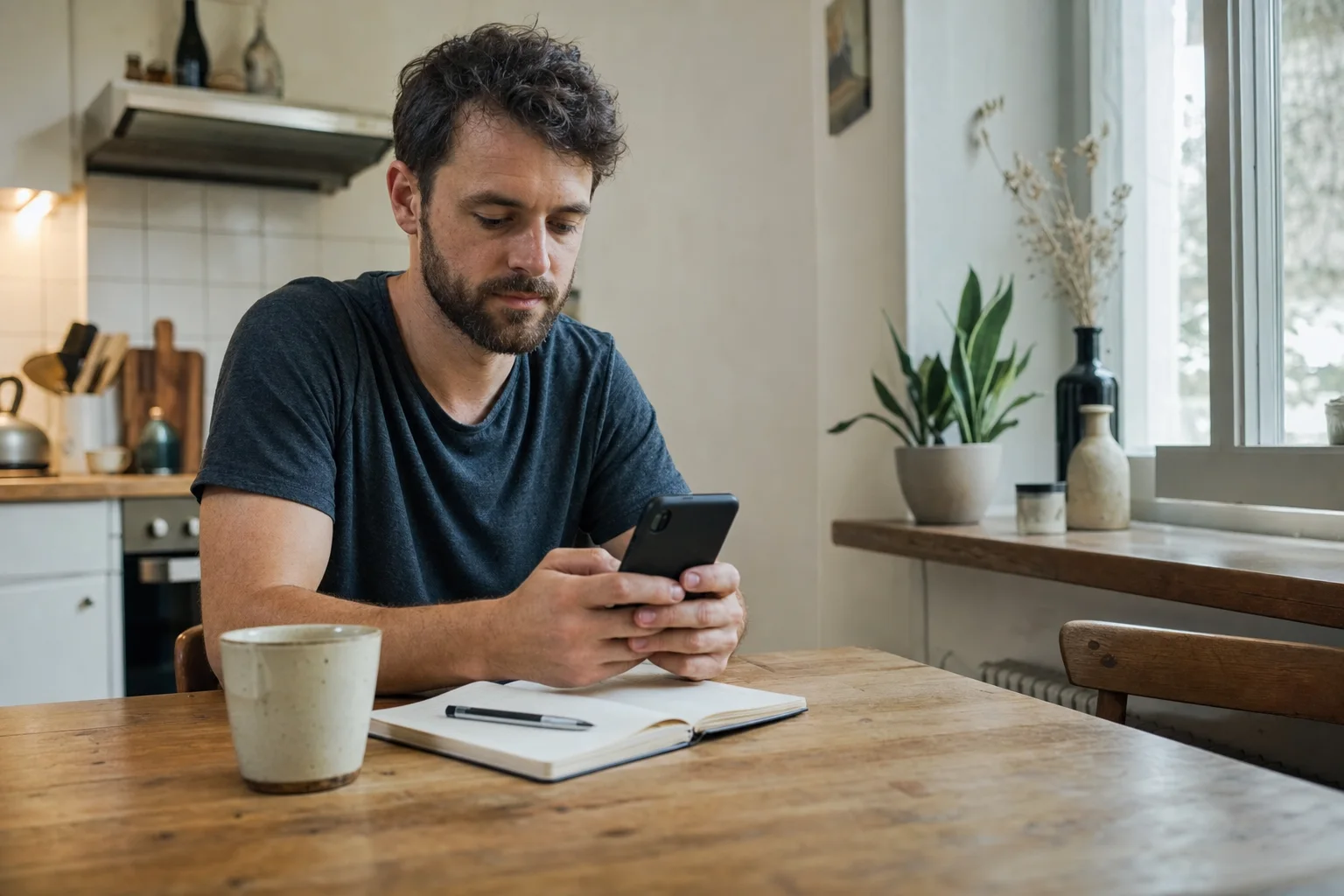
Decide what this reading moment is for
Open the Bible with one modest intention, not a vague promise to have a perfect quiet time. You might read one paragraph slowly, follow one chapter, or return to the verse you marked yesterday. A defined stopping point removes the pressure to keep reading until the session feels spiritual enough.
Begin with a short prayer that names the task: God, help me attend to what is here. This is not a technique for forcing insight. It simply reminds you that Bible reading is a meeting with a text to receive, not another feed to finish.
Make the phone quieter before you begin
Use Focus or Do Not Disturb before opening the passage. Apple lets you silence notifications, allow only chosen people or apps, and schedule a Focus for a regular time. Keep emergency contacts available if you need them. The aim is not isolation. It is fewer invitations to leave the sentence in front of you.
If one particular app keeps pulling you away, pause it for the reading window. Put the Bible app on the first Home Screen and move the distracting app out of the path. A useful boundary should reduce decisions rather than create another complicated ritual.
Try the two-minute anchor
When concentration is thin, do not answer it with a larger reading target. Use two minutes to anchor your attention in one short passage.
- Read the passage once without opening notes or cross-references.
- Read it again and notice one word, action, or question that holds your attention.
- Write one plain sentence about what the passage actually says.
- End with one response: a prayer, a question to revisit, or a next action for today.
Give curiosity a parking place
Digital Bibles make it easy to jump from a verse to a commentary, video, map, or search result. Those tools can help, but every jump changes the task. Keep a note called Look up later. Add the question there and stay with the passage until your planned stopping point.
If your mind wanders, return without scolding yourself. Read the last sentence aloud or trace it slowly with your finger. Bible Gateway's Scripture engagement guidance also suggests choosing a time when you are clearer, changing the reading practice when it has become automatic, and reading aloud when attention drifts.
Know when paper is the wiser tool
The best Bible is not always the one on your phone. If the device keeps turning a ten-minute reading into a fight, use a printed Bible for that season and keep the phone across the room. Digital and paper reading do not compete. They serve different circumstances.
For today, choose one short passage, turn on Focus, and stay with it for two minutes before opening anything else. That is enough to practice faithful attention. You can build a longer rhythm after the first small reading becomes real.