

Which part has actually fallen behind?
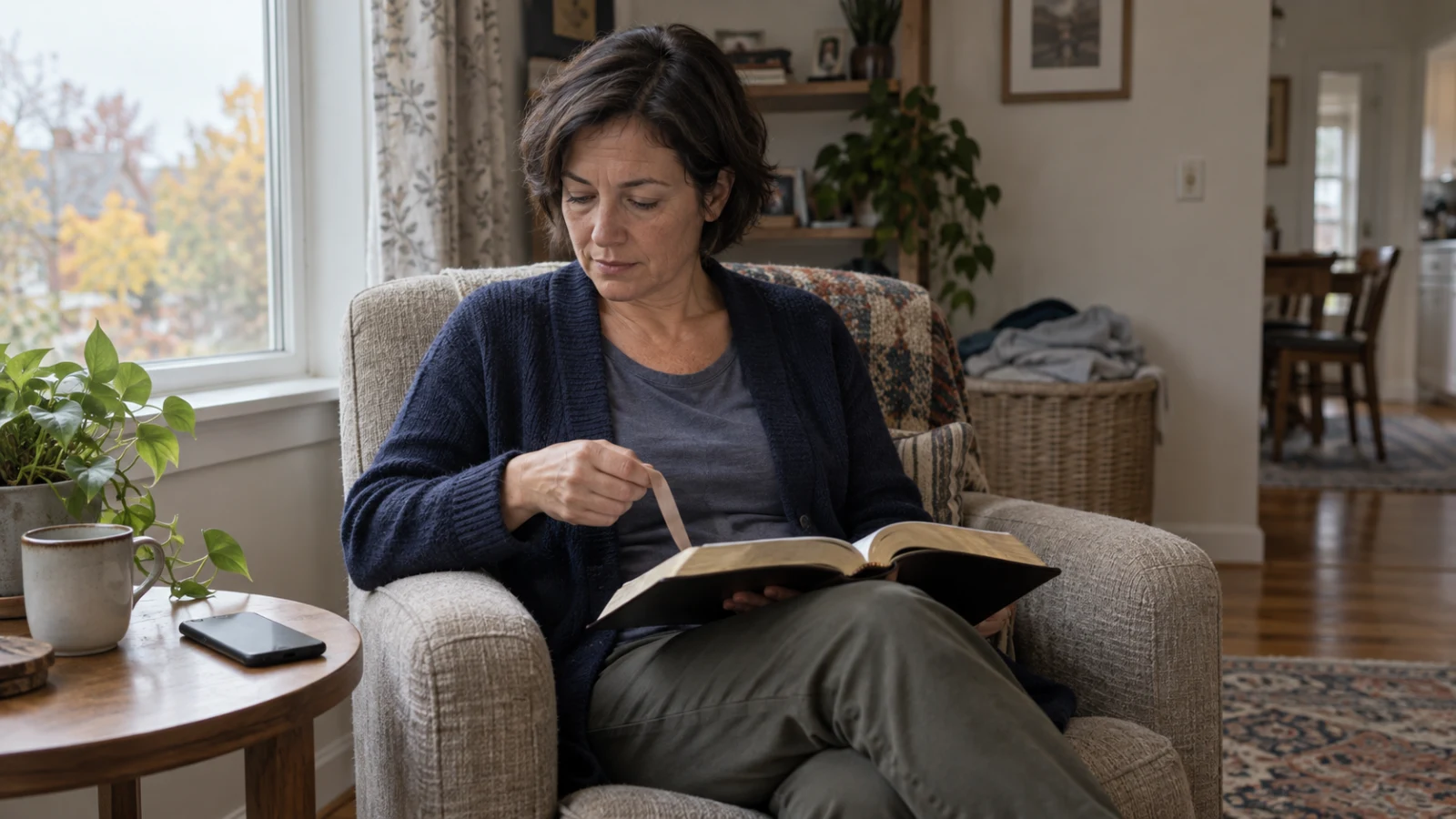
You open the app on Friday and see several unfinished days. Before closing it again, separate your place in the Bible from the date on the plan. Your bookmark says where to continue. The calendar says where an earlier schedule expected you to be. Those are useful pieces of information, but they answer different questions.
An app counter is different again. YouVersion's App Open Streak counts days the app was opened. It doesn't tell you how carefully you read. A streak can be encouraging without becoming the thing you are trying to protect at the expense of the reading itself.
Reading alone: keep the passage, move the deadline
Suppose your plan expects day 18 and you last finished day 12. Open day 13. If it contains more than you can attend to today, finish one complete section and mark your place. Leave the rest visibly unfinished. Tomorrow, continue there rather than choosing a new plan because the old one looks untidy.
Catching up is an option, not a requirement for returning. If you have a quiet afternoon and want to read more, do. But if an extra reading would turn the session into hurried checking, extend the finish date instead. When the amount has been unrealistic for several weeks, reduce it deliberately. An honest schedule change is more useful than repeatedly promising yourself that tomorrow will be unusually free.
Reading with others: prepare for the next meeting
A shared plan has another purpose: it gives people a passage to discuss together. Ask which reading the group will use next, read it with enough surrounding context to follow it, and bring a real question. You can say plainly that you missed some earlier readings. Joining the conversation need not wait until every box is checked.
Keep those earlier passages on a separate list if you intend to return to them. Don't mark them as read just to match everyone else's screen. If you're following your church's readings rather than a personal plan, ask its leader how best to rejoin. The group's rhythm and your private reading history don't have to be identical.
Rescheduling is not the same as completing
YouVersion's Catch Me Up reschedules a solo plan without completing unread sections; it isn't available for Plans with Friends. Its current iOS and Android help pages are linked below. Check your own app's instructions before using a similarly named control, since the same label need not mean the same action elsewhere.
Before changing anything, write down the last passage you actually finished. Afterwards, check that the next passage is the one you intended. If managing dates and counters has become a distraction of its own, keep your place with a paper bookmark for a while. You can read without resolving every number on a screen first.
Give an ordinary week some spare room
The Navigators Bible Reading Plan schedules 25 readings per month, leaving spare days. You don't need that particular plan to borrow the sensible idea of leaving room. Look at the week you actually have, including late shifts, travel and family commitments, before deciding how many new readings belong in it.
Try reserving a short reading after an event you can recognize, such as putting away your breakfast dishes. Leave some sessions available for unfinished passages or a second look at something difficult. If you keep stopping at the same chapter, ask whether you need help understanding it rather than another reminder. Bring the question to someone you trust at church.
Let the next bookmark hold a question, not a score
Ephesians 2:8-10 connects salvation with grace and a life of good works, not a tally of completed readings. We can take Bible reading seriously without treating a scheduling tool as a verdict on our relationship with God. Returning to an unfinished passage is already something you can do today.
Open that passage now and read for the time you have. Before you stop, write its next verse reference on a bookmark and add one question about what you've just read. That gives tomorrow a clear starting point and something worth returning to. You might pray: God, help me listen to the passage in front of me, not to the number I wish I had reached.