

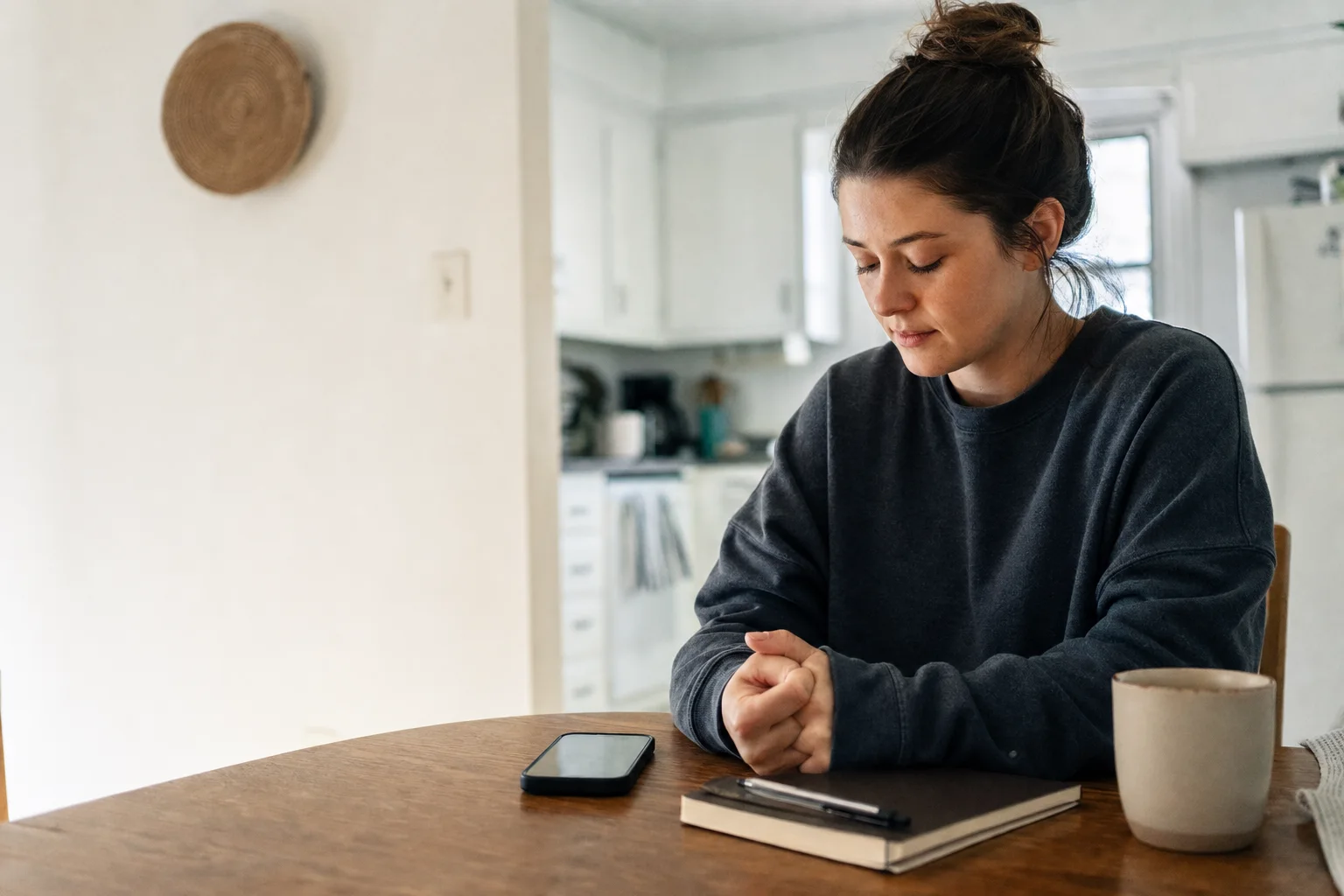
Why willpower is a fragile plan
A phone is useful, necessary, and always close. That is exactly why a plan based only on avoidance often falls apart. Work, messages, maps, banking, and family life may all require the same device that holds the distracting apps.
A more realistic approach separates useful phone use from automatic scrolling. Instead of demanding a complete digital disappearance, add a meaningful boundary at the moment of choice. The boundary can be brief, but it should be specific enough to interrupt the reflex.
A simple 15-second prayer pause
Use the same short sequence each time you reach for a feed. Repetition removes the need to invent a new spiritual response while you are already distracted.
- Stop and let one full breath finish before tapping again.
- Pray one honest sentence: God, guide what receives my attention next.
- Ask what you came to do: reply, learn, post, rest, or simply escape discomfort.
- Choose a next step. Open the app for a reason, or leave it closed without shame.
Keep the prayer concrete
A useful prayer names the real moment. If you are lonely, say that. If you are avoiding a difficult task, say that. If you simply want ten minutes of entertainment, say that too. Honesty is more sustainable than dramatic promises you cannot keep.
The goal is not to make every app opening feel heavy. The goal is to notice whether the next action serves what matters to you. A short verse can help, but do not turn the pause into a test you must pass. Scripture is an invitation back to truth, not a punishment for touching your phone.
Design the environment, not only the intention
Apple Screen Time can show device activity, schedule downtime, and set limits for apps or categories. Those tools are useful because they move the boundary out of your memory and into the environment. Pray Shield builds on the same idea with a Christian prayer pause before selected distractions.
Start with one or two apps, not your entire phone. Choose the places where you most often lose the reason you opened them. A boundary that you can live with is more useful than a severe setup you disable tomorrow.
What progress can look like
Progress may be one intentional exit, one calmer morning, or one moment when you notice that you are looking for comfort rather than information. Those moments are small, but they change the relationship between impulse and action.
If phone use is causing serious distress or disrupting work, sleep, relationships, or safety, a prayer routine can support you but should not replace professional help. The practice here is a spiritual and practical boundary, not a diagnosis or treatment.